
TechBustor

TechBustor

IT cost optimization

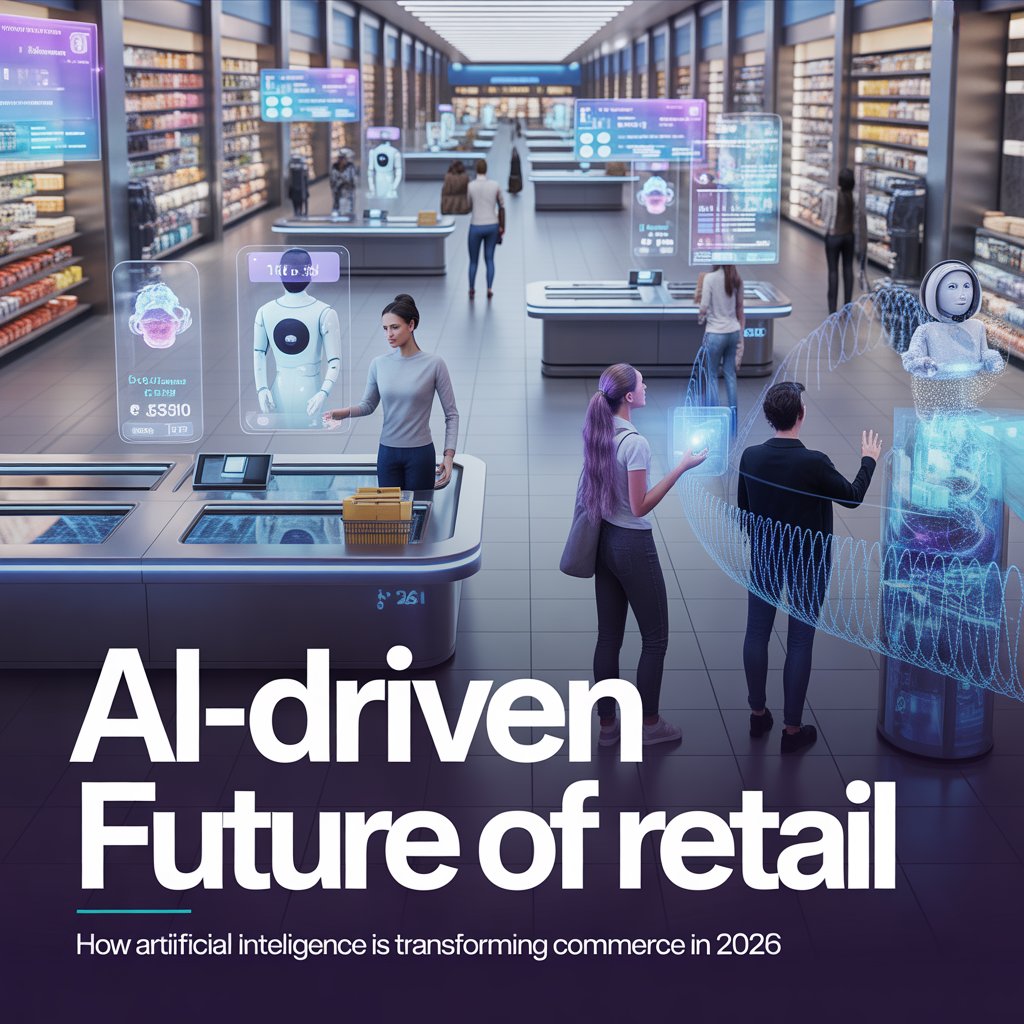
AI-Driven Future of Retail personalized shopping experience
AI, Artificial Intelligence & Automation, GLOBAL NEWS

AI-Driven Future of Retail: How Artificial Intelligence is Transforming Commerce in 2026

The AI-Driven Future of Retail is no longer just an idea — it is actively changing how businesses sell, market, and interact with customers. In 2026, artificial intelligence is helping retailers automate operations, personalize shopping, predict trends, and improve customer satisfaction like never before. Learn more about how AI and Machine Learning work in real-world applications. Retail and commerce are becoming smarter, faster, and more efficient. Whether it is online shopping, physical stores, or supply chain management, AI is driving the next wave of innovation. How AI is Changing Retail in 2026 1. AI-powered retail future: Personalized Shopping Experience AI allows retailers to analyze customer behavior and preferences in real-time. This helps brands recommend products that customers actually want. Instead of generic suggestions, shoppers receive tailored product options, offers, and deals. Examples: 2. AI-Driven Future of Retail: Smart Inventory Management Retailers are using AI for better stock planning and automation. According to IBM’s retail AI research, AI helps improve inventory accuracy and operational efficiency. Benefits: This makes the AI-Driven Future of Retail highly efficient and profitable. 3. AI-Driven Future of Retail: AI Chatbots and Virtual Assistants Customer service is becoming faster with AI chatbots. These bots answer questions, help in product selection, and even process returns or refunds instantly. Key advantages: 4. AI-Driven Future of Retail: Automated Pricing Strategies AI tools monitor market trends, competitor pricing, and demand. This allows retailers to change prices dynamically to maximize profit. Example:If demand increases, AI automatically adjusts the product price. 5. AI-powered retail stores and smart shopping environments Physical stores are becoming smarter with AI. Technologies like smart cameras, sensors, and facial recognition help retailers understand shopper behavior. Examples: AI in E-Commerce and Online Retail Online commerce is growing rapidly, and AI is at the center of it. Key Uses of AI in Online Shopping Benefits of the AI-Driven Future of Retail A recent report by McKinsey on AI in retail explains how artificial intelligence is reshaping customer experience and supply chain management. Benefit Impact Personalization Higher customer satisfaction Automation Saves time and reduces costs Predictive Analytics Helps plan better sales strategies Better Customer Support Improves brand loyalty Faster Operations Enhances productivity Challenges in AI-Based Retail While AI offers many advantages, retailers also face challenges: Despite this, the AI-Driven Future of Retail is the future of commerce worldwide. The Future of Retail is Intelligent In 2026 and beyond, retailers who adopt AI early will gain a competitive advantage. AI is helping brands become smarter, more responsive, and more customer-focused. The next generation of commerce will include:

Cloud Computing

Cloud Cost Optimization: A Simple Guide to Reduce Cloud Expenses

Cloud computing has become a backbone for modern businesses. From startups to large enterprises, almost everyone is using cloud services today. But one common problem many companies face is high cloud bills. This is where cloud cost optimization becomes very important. Cloud cost optimization means managing and reducing cloud spending while still maintaining performance, security, and reliability. In simple words, it helps you save money on the cloud without breaking your system. In this blog, we will understand what cloud cost optimization is, why it matters, and how you can do it easily — even if you are a beginner. What Is Cloud Cost Optimization? Cloud cost optimization is the process of monitoring, analyzing, and controlling cloud usage to reduce unnecessary expenses. Many businesses pay more than required because they don’t track how cloud resources are used. Sometimes servers run even when not needed. Other times, companies choose bigger plans than required. All these small mistakes increase the cloud bill month by month. Cloud cost optimization helps you: It is not about cutting corners, but about using cloud services smartly. Why Cloud Cost Optimization Is Important Cloud services look affordable at the start, but costs increase slowly over time. Without optimization, businesses may waste thousands of rupees every month. Here are some main reasons why cloud cost optimization is important: 1. Saves Money Optimizing cloud usage can reduce costs by 20% to 50%. That saved money can be used in marketing, hiring, or product development. 2. Better Resource Management It helps teams understand where resources are used and where they are wasted. 3. Improves Performance Removing unnecessary workloads improves system performance and speed. 4. Helps Business Growth When costs are under control, businesses can scale faster without fear of high bills. Common Reasons for High Cloud Costs Before optimizing, it’s important to know why cloud costs increase. Over-Provisioning Many businesses choose high-capacity servers “just in case,” but end up not using them fully. Unused Resources Idle virtual machines, unused storage, and inactive databases still cost money. Lack of Monitoring Without monitoring tools, teams don’t know which service is costing how much. No Budget Limits When no spending limit is set, costs can grow without warning. Cloud Cost Optimization Strategies (Simple & Practical) Now let’s talk about real, easy methods to optimize cloud costs. Right-Size Your Cloud Resources Right-sizing means selecting the correct size of servers, storage, and databases. If a server is using only 20% of its capacity, it’s a waste of money. Reducing its size can lower costs without affecting performance. Regularly review: This single step can save a lot. Remove Unused and Idle Resources Many cloud resources stay active even when not needed. Examples: Make it a habit to clean unused resources every month. This small action makes a big difference. Use Auto-Scaling Auto-scaling adjusts resources automatically based on demand. When traffic increases, resources scale up. When traffic goes down, resources scale down. This means: Auto-scaling is very useful for websites, apps, and eCommerce platforms. Set Budgets and Cost Alerts One of the best cloud cost optimization practices is setting budgets. You can: This helps you act before the bill gets too high. Many businesses ignore this simple feature. Choose the Right Pricing Model Cloud providers offer different pricing options: If you have predictable workloads, long-term plans are cheaper. For flexible usage, pay-as-you-go works better. Choosing the wrong plan increases cost without benefit. Monitor and Analyze Cloud Usage Regularly Cloud cost optimization is not a one-time task. It requires regular monitoring. Track: Regular reviews help you find problems early and fix them fast. Use Cloud Cost Optimization Tools There are many tools that help in cloud cost optimization. These tools: Even basic monitoring dashboards are enough for beginners. Cloud Cost Optimization for Small Businesses Small businesses often think cloud optimization is only for big companies. That’s not true. For small businesses: Simple steps like deleting unused services and setting budgets can save a lot. Cloud Cost Optimization Best Practices Here are some best practices you should follow: Small habits lead to big savings over time. Cloud Cost Optimization in 2026 In 2026, cloud usage will grow even more. AI, automation, and data-heavy apps will increase cloud dependency. Cloud cost optimization will not be optional anymore. Businesses that fail to optimize will struggle with high operational costs. Future-focused companies are already investing in: Final Thoughts on Cloud Cost Optimization Cloud cost optimization is not about reducing quality or stopping growth. It’s about using cloud services wisely. With simple steps like right-sizing, monitoring, and removing unused resources, any business can control cloud costs. Whether you are a startup, student, or enterprise, learning cloud cost optimization is a valuable skill today and for the future. If you are using cloud and not optimizing costs, you are probably paying more than needed — and that’s money you can save starting today.

We use cookies to personalise content and ads, to provide social media features and to analyse our traffic. We also share information about your use of our site with our social media, advertising and analytics partners. View more
Cookies settings
Accept
Privacy & Cookie policy
Privacy & Cookies policy
Cookie name Active
Save settings
Cookies settings
Scroll to Top

GET A FREE QUOTE